 ch
ch
 Italy
Italy France
 Spain
Spain Portugal
 Poland
 Bulgaria
 Czech republic
 Slovakia
 Romania
 Turkey
 Lithuania
 Germany
 Montenegro
 Netherlands
 Serbia
 United Kingdom
 Croatia
 Hungary
 Luxembourg
 Ireland
 Norway
 Denmark
 Brazil
 Argentina
 Colombia
 India
India China
China Hong Kong (China)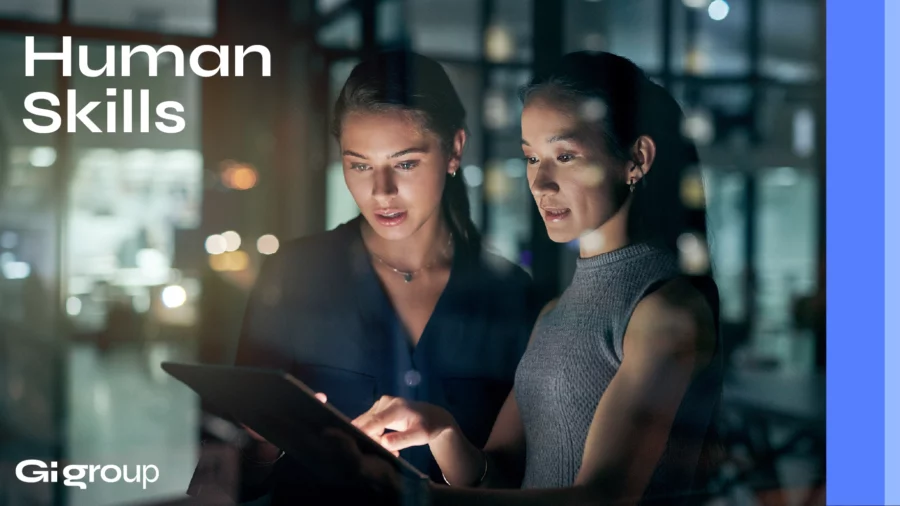
Human skills are capabilities such as communication, critical thinking, adaptability and empathy that enable people to work effectively with others and respond to change. In the AI era, they are increasingly valued because they are difficult to automate.
Table of contents
“In an age of artificial intelligence (AI) and disruption, the true competitive edge is human.” This is how the World Economic Forum opens its whitepaper on the skills shaping the new economy and the future of work.
A few years ago, technical expertise was often seen as the strongest advantage a candidate could bring to the workplace. Today, that expectation is shifting. As automation and AI tools become part of everyday work, the skills employers value the qualities that go beyond a job title and influence how people approach work. Something we call human skills.
Unlike traditional “soft skills”, human skills recognise the irreplaceable human dimension of work: creativity, empathy, adaptability, critical thinking, and collaboration. In practice, they influence how teams solve problems, support customers and respond to change. They are not secondary skills. In fact, in many roles, human skills are exactly what makes technical knowledge effective.
At the same time, workplaces are becoming more complex. Teams collaborate across different locations, job responsibilities evolve quickly, and professionals are expected to learn continuously throughout their careers. In this environment, human skills are becoming a long-term employability advantage.
Why “soft skills” is no longer the right term?
For years, capabilities like communication, adaptability or empathy were grouped under the label “soft skills”, a term that unintentionally made them sound secondary to technical expertise. While these abilities were often seen as complementary to technical knowledge, they are rarely considered a key driver of performance.
Today, that perception is changing. As workplaces become more complex and technology takes over a growing number of routine tasks, organisations are paying closer attention to the skills that enable people to collaborate and make sound decisions.
This shift has led to the emergence of terms such as human skills, human-centric skills and durable skills, which better reflect the value and impact of these capabilities in the workplace.
As artificial intelligence and automation reshape the world of work, the skills that increasingly differentiate people are deeply human ones: creativity, critical thinking, emotional intelligence, collaboration, resilience.
Thus, the evolution from “soft skills” to “human skills” is not simply a change in language. It reflects a recognition that these qualities are a fundamental part of professional identity and performance, not an optional complement to technical expertise.
The World Economic Forum describes these capabilities as the new “hard currency” of the labour market.
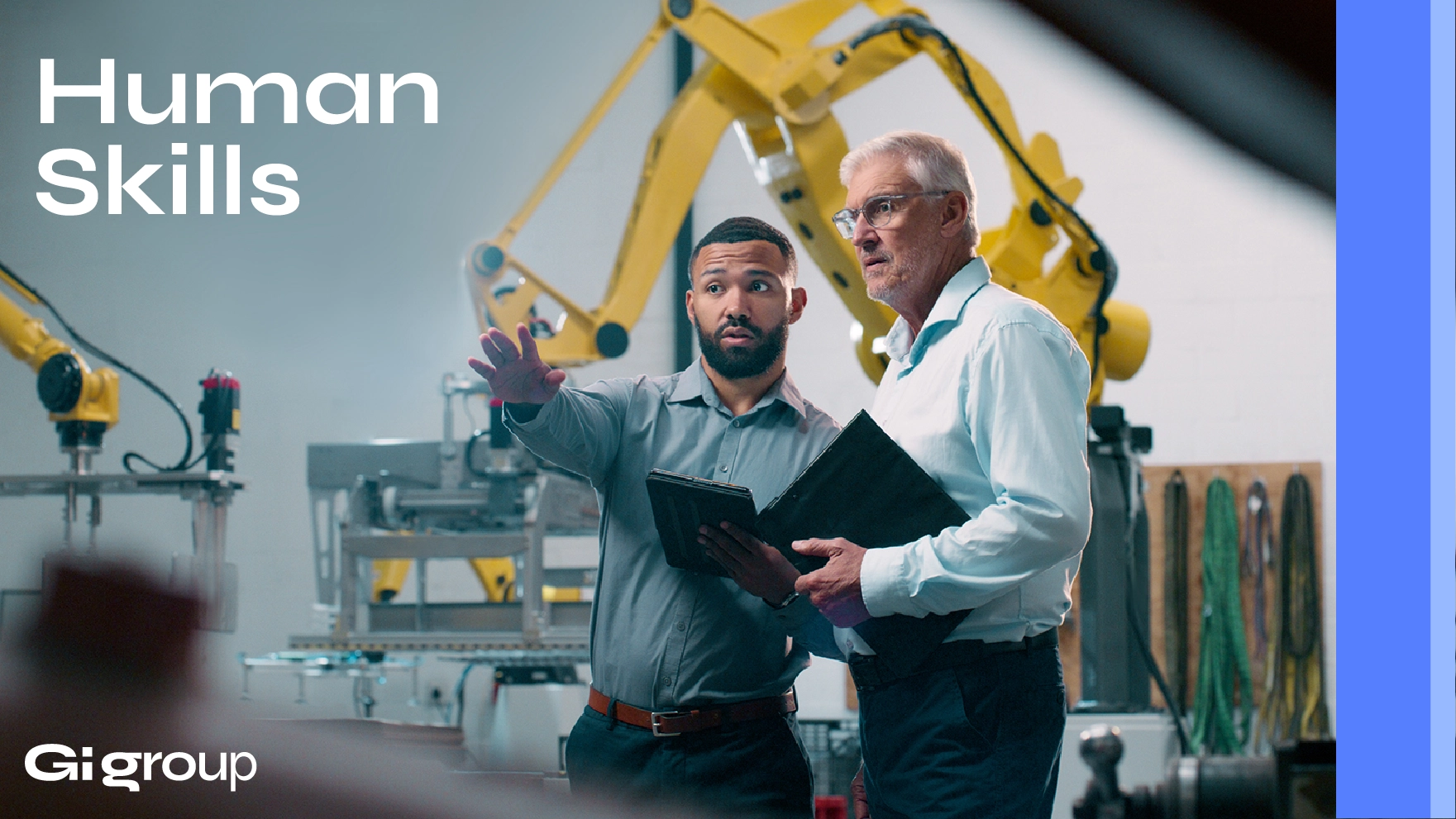
Why human-centric skills matter more in the AI era
The rise of AI has also changed the conversation around productivity. Tasks that once required significant time, such as, summarising large volumes of data, can now be completed much faster with digital tools.
But as technology accelerates certain types of work, the human side becomes more visible, not less. While teams are expected to collaborate across locations, departments and time zones, employees are also increasingly asked to adapt to new systems, workflows and responsibilities.
According to the World Economic Forum, tasks linked to empathy, leadership and curiosity have limited potential for AI transformation, only 13%, because they rely on human context and lived experience.
This is one reason why terms like human skills, human-centric skills or durable skills are increasingly replacing “soft skills”.
Furthermore, in many workplaces, the challenge is no longer access to information, but knowing how to interpret it and apply it.
This is one of the reasons why employers are placing greater importance on:
- communication
- critical thinking
- adaptability
- empathy
- judgement
- creativity
- AI limitations
- automation resistance
- human context
These skills help people navigate uncertain times and make complex decisions that are crucial in working with others in environments where change is constant.
The World Economic Forum estimates that nearly 40% of core workplace skills will change within the next five years.
But what is changing is the growing expectation that professionals can combine technical knowledge with judgement, collaboration and learning agility. That is why human skills are no longer viewed as complementary.
Human skills can be developed through experience
Human skills are often shaped by a combination of natural inclination and lived experience. Some people may naturally be curious or adaptable, while others may feel more comfortable organising or leading. However, these qualities do not remain fixed throughout a career.
Work experiences play an important role in developing human skills. Managing a difficult conversation, joining a new team, solving an unexpected problem, or adapting to change can all strengthen the way people communicate and make decisions.
This is one reason why human skills cannot be measured by qualifications alone. They are often revealed through behaviour rather than credentials. two people with the same title or technical expertise may approach challenges very differently because of the experiences that shaped them throughout their careers.
Ate the same time, these skills continue to evolve. Research from the World Economic Forum shows that several human-centric skills declined during the pandemic, with several interpersonal and resilience-related skills falling significantly, over 5% below 2019 levels, during periods of isolation and disruption. Developing human skills is, therefore, not a one-time achievement, but an ongoing process shaped by experience and continuous growth.
For candidates, this means that every role can contribute to building valuable skills that transfer across industries and career paths. For employers, it highlights the importance of creating environments where people can learn and continue developing their strengths over time.
Human skills are becoming a long-term advantage
For all the reasons stated above, it is natural that human skills are becoming more visible in hiring decisions and long-term employability.
Technical knowledge will continue to evolve. Tools will change. Roles will adapt. But the ability to work well with people, navigate uncertainty and respond thoughtfully to complex situations will remain valuable across industries and throughout different stages of a career.
At Gi Group, we believe every professional brings more than a job title to the workplace. Behind every role are human skills that help teams move forward, businesses grow and careers evolve. Supporting people in recognising and developing those strengths is part of how we help connect talent with opportunity.
FAQs (Frequently Asked Questions)
Technical skills remain essential, but human skills help professionals apply technical knowledge effectively in real work environments and teams.
Yes. Skills such as communication, leadership and adaptability improve through experience, feedback and continuous practice.
Capabilities linked to empathy, judgement, creativity and emotional intelligence remain difficult for AI systems to replicate.
Human skills help professionals navigate change, work effectively with others and remain adaptable as job roles evolve.