
 ch
 Italy
 France
 Spain
 Portugal
 Poland
 Bulgaria
 Czech republic
 Slovakia
 Romania
 Turkey
 Lithuania
 Germany
 Montenegro
 Netherlands
 Serbia
 United Kingdom
 Croatia
 Hungary
 Luxembourg
 Ireland
 Norway
 Denmark
 Brazil
 Argentina
 Colombia
 India
 China
 Hong Kong (China)
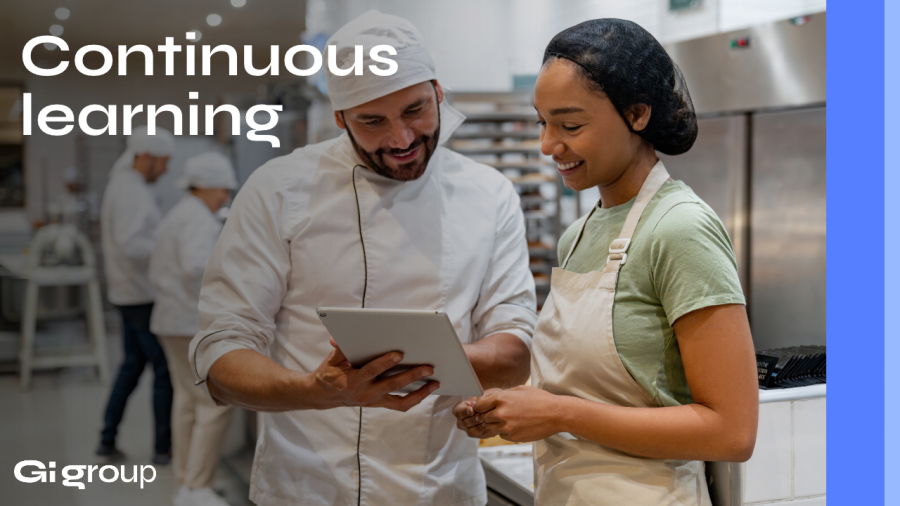
The importance of continuous learning in the workplace lies in its direct link to adaptability, productivity and retention: organisations that keep skills current respond faster to change and keep their best people. In Switzerland, where skills shortages and technological change are reshaping entire sectors, this is no longer optional. This article explains what continuous learning means in practice, why it matters now, and how to build a culture that sustains it.
Key takeaways
- Continuous learning in the workplace directly supports adaptability, productivity and employee retention, making it a strategic priority rather than a training formality.
- In Switzerland, 45% of the resident population aged 25 to 75 took part in at least one continuing education activity in the 12 months prior to the survey, according to the latest available Federal Statistical Office and SBFI figures.
- Employees who receive regular learning opportunities are more likely to stay with their employer, reducing the cost and disruption of turnover.
- A strong continuous learning culture depends on visible leadership involvement, varied and accessible formats, and a clear link between learning activities and business goals.
- Talent partners such as Gi Group support Swiss companies with skills planning and specialised recruitment that complement internal upskilling and reskilling efforts.
What is continuous learning and why it matters
Continuous learning is the ongoing, deliberate process of building new skills and knowledge throughout a career, rather than treating training as a one-off event. It matters because skill requirements across most Swiss industries now change faster than traditional education cycles can keep pace with.
Continuous learning versus one-off training
Continuous learning differs from one-off training in scope and timing. One-off training addresses a specific, immediate need, such as onboarding on a new software tool, and then ends. Continuous learning is an ongoing habit of continued learning, built into everyday work rather than confined to isolated sessions.
Both have a place. Structured onboarding training and long-term development pathways work best together, so new skills stay current as roles evolve, rather than functioning as a replacement for ongoing training already built into how teams work.
The pace of change: AI, automation and shifting skill demands
Artificial intelligence (AI) and automation are changing which skills are in demand faster than at almost any point in recent history. Roles across manufacturing, logistics and administrative functions in Switzerland are being redesigned around new digital tools, and employees need structured support to keep pace.
This does not mean roles disappear outright. It means the specific tasks within a role shift, and a continuous learner is better positioned to take on the tasks that replace the ones automation removes.
What employees expect from employers today
Employees increasingly expect employers to invest in their ongoing development, not only their onboarding. Career growth, skills relevance and long-term employability now rank alongside salary as reasons candidates choose one employer over another, which helps explain why professional development is important for retention as well as growth.
For employers, this shifts continuous learning from a discretionary benefit to a genuine part of the employee value proposition.
The cost of not investing in learning
Failing to invest in continuous learning carries a real cost: skills gaps widen, productivity stalls, and employees become more likely to leave for employers offering clearer development paths. 29% of the permanent resident population in Switzerland aged 25 to 64 had not taken part in any continuing education for at least five years, according to Federal Statistical Office (BFS) figures published in March 2024, with the gap especially pronounced among people with lower initial qualifications and those aged 55 to 64.
Left unaddressed, this gap becomes a competitiveness problem for organisations, not only an individual one.
The business case: how continuous learning pays off
Continuous learning pays off through measurable gains in productivity, retention and agility, not only through softer benefits like morale. Companies that treat learning as ongoing infrastructure, rather than a compliance box to tick, consistently report stronger workforce performance.
The benefits of continuous learning in the workplace typically show up in three areas: faster adoption of new tools and processes, lower turnover-related costs, and a workforce able to take on new tasks without needing to be replaced entirely. In competitive Swiss labour markets, where recruitment can be slow and costly, retaining and reskilling existing employees through temporary staffing or permanent staffing support is often more efficient than continuous external hiring.
Looking to plan your workforce around changing skill needs? Explore Gi Group’s permanent staffing solutions for Switzerland.

Core benefits of continuous learning
Continuous learning benefits both employees and organisations, though the specific gains differ. The benefits of continuous learning and development extend well beyond compliance training: employees gain stronger employability, while organisations gain a more adaptable, productive workforce.
For employees
- Stronger employability: skills stay relevant even as roles and tools evolve.
- Greater job satisfaction: employees who see a clear professional journey report higher engagement.
- Career mobility: a continuous learner is better positioned for internal promotion or a role change.
- Confidence to adapt: a proven ability to pick up new tools and processes reduces anxiety around change, including AI and automation deployments.
For organisations
- Higher retention: learning opportunities are consistently linked to employees staying longer.
- Improved productivity: teams that keep pace with new tools and processes complete work more efficiently.
- Reduced skills gaps: internal reskilling closes gaps faster than external recruitment alone.
- Stronger employer brand: companies known for investing in development attract candidates more easily in tight labour markets.

Common barriers to a learning culture, and how to address them
The most common barriers to a continuous learning culture are limited time, unclear ownership and a disconnect between learning content and daily work. Each barrier needs a different response.
| Barrier | Why it happens | How to address it |
| Limited time | Learning competes with day-to-day workload | Build short, focused sessions into existing workflows rather than separate blocks |
| Unclear ownership | No one is accountable for tracking or encouraging participation | Assign a clear owner, whether HR, a line manager or a dedicated learning and development (L&D) function |
| Low relevance | Content feels generic or disconnected from actual tasks | Tie learning directly to specific roles, projects or skills gaps identified in performance conversations |
| Limited budget | Learning is seen as a discretionary cost | Start with low-cost formats such as peer learning and on-the-job coaching, and scale up as impact becomes visible |
| Resistance to change | Employees are sceptical after past training that led nowhere | Communicate openly about why learning matters now and show visible leadership participation |
How to build a continuous learning culture
Building a continuous learning culture requires more than offering courses: it needs visible leadership support, accessible formats and a clear link to business goals. The following five practices consistently support a strong continuous learning culture.
Get leadership to model learning behaviour
Leaders who visibly continue learning give the rest of the organisation permission to do the same. When managers talk openly about skills they are developing, employees are more likely to see learning as normal rather than remedial.
Offer varied, accessible learning formats
Different roles and learning styles call for different formats, including short e-learning modules, on-the-job coaching, mentoring, workshops and external courses. Accessibility matters as much as variety: shift workers in manufacturing or logistics need formats that fit around their schedules, not only desk-based e-learning.

Tie learning to real business goals
Learning that connects to a specific business goal, such as a new production process or a compliance requirement, sees far higher engagement than generic development content. Where possible, link individual learning plans to team or company objectives so the value is clear to both employees and managers.
Make space for practice, not just theory
Knowledge only becomes a skill through practice. Building in time to apply new learning, whether through a pilot project, shadowing or supervised practice, is what turns training into lasting capability.
Track participation and impact
Tracking who is participating, and what changes as a result, keeps continuous learning accountable rather than symbolic. Without tracking, it is difficult to know whether a learning culture is genuinely taking hold.
Continuous learning formats and examples
Continuous learning takes many practical forms, and most organisations benefit from combining several rather than relying on one. The table below sets out formats commonly used across Swiss workplaces.
| Format | Most suited for | Example |
| On-the-job coaching | Practical, role-specific skills | A supervisor guiding an operator through a new machine setting |
| E-learning modules | Flexible, self-paced learning | Short compliance or software modules completed between shifts |
| Mentoring | Long-term career development | Pairing an experienced employee with someone new to a role |
| Job rotation | Broadening skills across functions | Moving a logistics employee through different warehouse stations |
| External courses and certifications | Formal, recognised qualifications | A technical certificate obtained through a 3rd party formation provider, like temptraining |
| Peer learning groups | Sharing practical knowledge at low cost | Regular team sessions where colleagues teach each other a specific skill |
Measuring the impact of continuous learning
The impact of continuous learning is best measured through a combination of participation metrics and business outcome metrics. What needs to be linked to outcome is participation. Standing alone does not confirm impact.
Participation and completion metrics
Participation and completion metrics show whether a learning culture is being used, not whether it works. Useful indicators include the percentage of employees completing at least one learning activity per quarter, and completion rates for assigned training.
Business outcome metrics: retention, productivity and promotion rates
Business outcome metrics connect learning activity to results that matter to the organisation. Retention rates among employees who participate in learning, internal promotion rates and productivity changes following a training rollout all provide a clearer picture of return on investment (ROI) than participation numbers alone.
The role of talent partners in building a learning culture
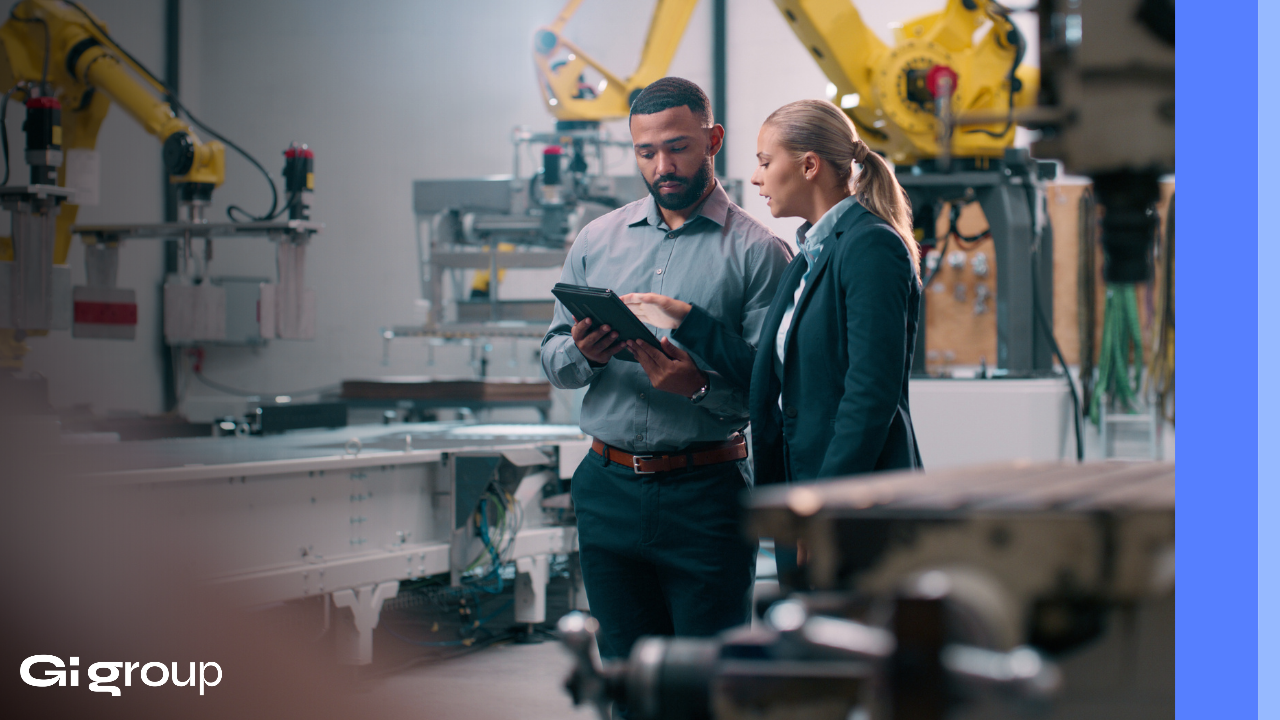
Talent partners support a continuous learning culture by identifying skills gaps, sourcing training expertise and helping companies plan workforce development alongside recruitment. This is particularly valuable for organisations without a dedicated learning and development (L&D) function.
When to build training in-house versus bring in outside expertise
Building training in-house makes sense for skills specific to a company’s own processes or systems, where internal expertise already exists. Bringing in outside expertise is often more efficient for specialised technical skills, compliance training or when internal capacity is limited. Many Swiss companies combine both, using internal trainers for company-specific knowledge and external partners for broader or technical skills.
How Gi Group supports upskilling, reskilling and talent development
Gi Group specialises in temporary staffing, permanent recruitment, technical recruitment and onsite or master vendor HR services across manufacturing, logistics, construction and pharmaceutical sectors in Switzerland, and works alongside clients to identify skills gaps as part of broader workforce planning. In Switzerland, Gi Group also runs Gi Training, which includes Temptraining: subsidised continuing education for temporary workers covered by the Collective Employment Agreement (CEA) for Staff Leasing, offering up to CHF 5,000 towards course fees and up to CHF 2,250 in wage-loss compensation.
Building a skills strategy for changing roles? Explore Gi Group’s recruitment services for Switzerland.
The future of continuous learning at work
The future of continuous learning at work is likely to be shaped by AI-supported personalisation, shorter and more frequent learning formats, and closer integration between learning and daily workflows. Static, once-a-year training calendars are giving way to continuous, on-demand approaches.
Employers who build flexible, ongoing learning into how work happens, rather than treating it as a separate activity, are likely to adapt fastest as skill demands continue to shift.
Conclusion: the importance of continuous learning in the workplace
The importance of continuous learning in the workplace comes down to adaptability: organisations that build it into everyday work respond faster to change, retain employees longer and close skills gaps before they become critical. This applies across every sector represented in the Swiss labour market, from manufacturing and logistics to technical and specialised roles.
Building a genuine continuous learning culture takes leadership commitment, accessible formats and clear tracking, but the return in retention, productivity and workforce readiness is measurable.
Ready to plan your workforce around changing skills needs? Contact Gi Group to discuss workforce and skills planning tailored to your sector.
FAQ
Continuous learning in the workplace is the ongoing process of building new skills and knowledge throughout a career, rather than through a single training event. It typically combines formal courses with informal learning such as coaching, mentoring and on-the-job practice.
Continuous learning is important for career growth because it keeps skills relevant as roles and technology change. Employees who continue learning are better positioned for promotion, internal moves and new responsibilities.
Small businesses can build a learning culture on a limited budget by prioritising low-cost formats such as peer learning, mentoring and on-the-job coaching over expensive external courses. Even short, regular knowledge-sharing sessions can build momentum without significant cost.
Yes. Through Gi Training‘s Temptraining scheme, temporary workers covered by the Collective Employment Agreement (CEA) for Staff Leasing can receive up to CHF 5,000 towards recognised courses and up to CHF 2,250 in wage-loss compensation. Eligibility requires at least 88 hours of temporary work in the previous 12 months, and covers language courses, workplace safety training, professional or technical training, and career counselling or retraining